

PROGRAMS
One framework. Three populations.
Here's how it shows up for each one.

Find the section that matches your world — school, facility, or practice — for what ChoiceUp delivers, who it's for, and what changes when it's in place.


Youth & Education
Young people don’t build lasting decision-making skills by being told what not to do. They build them by learning to notice what’s been driving their choices all along. ChoiceUp works with schools, counselors, and youth-serving organizations to give young people a concrete, age-appropriate way to recognize how fear, pressure, and reaction shape their choices, and to practice making grounded ones instead.
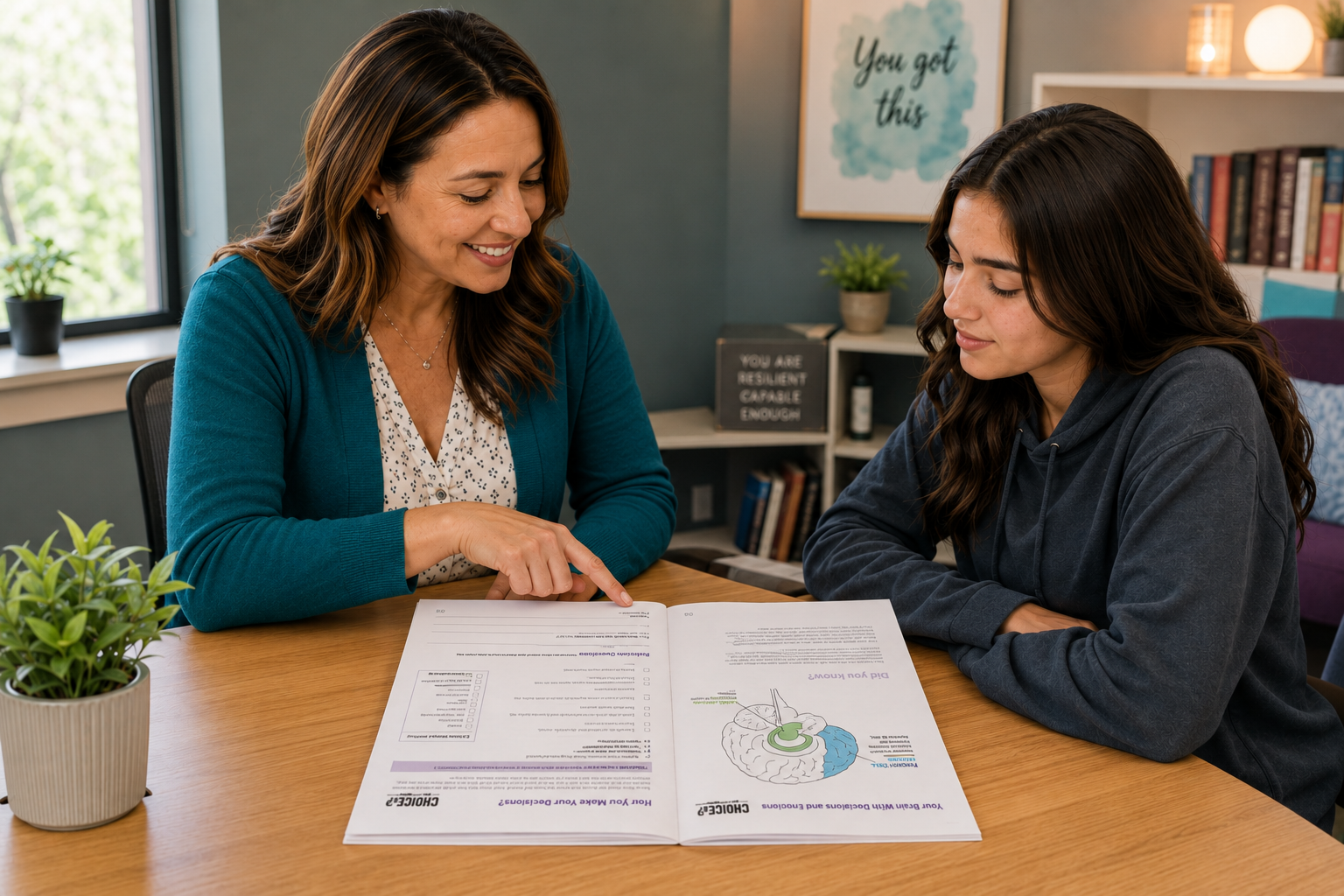
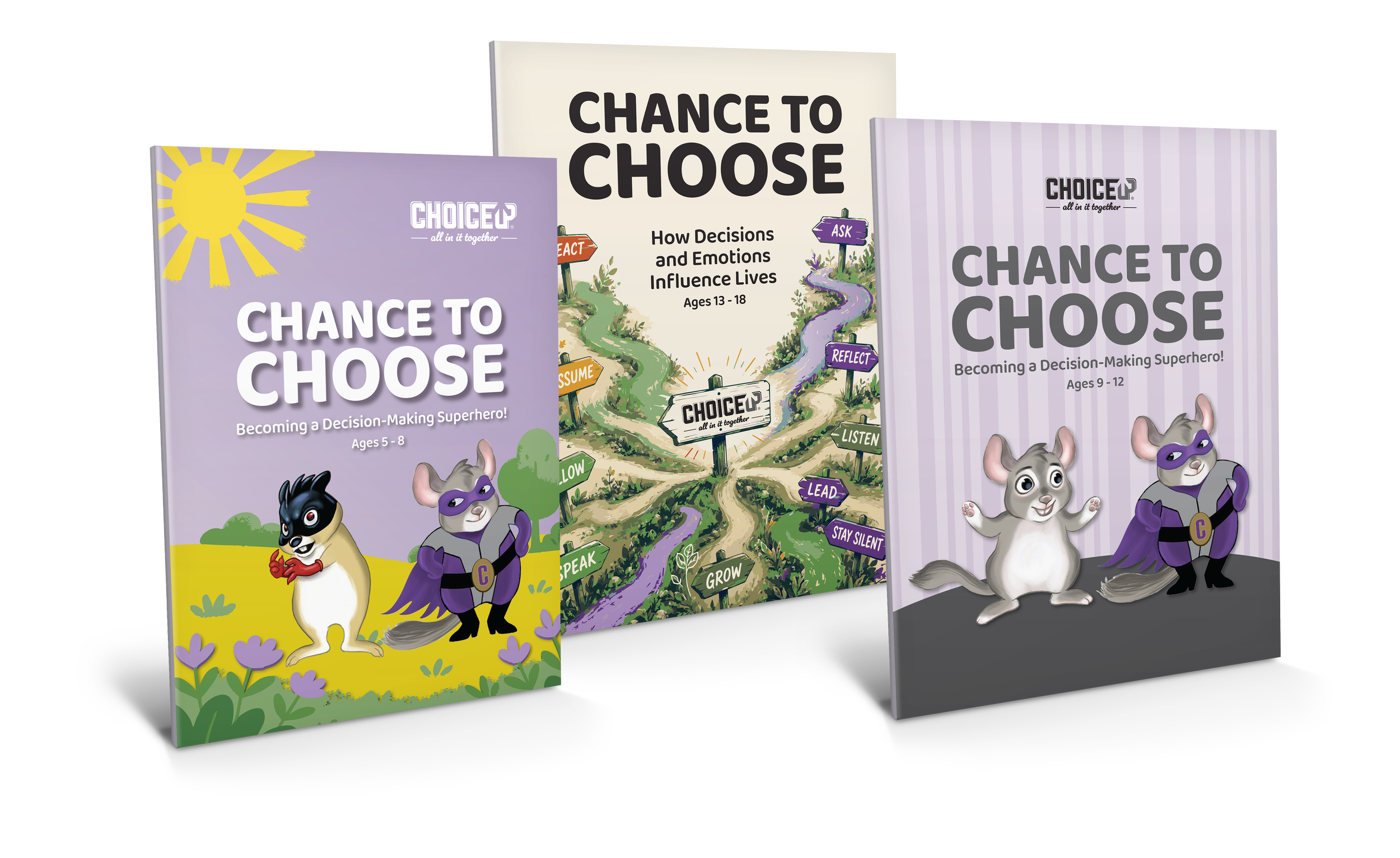
Today, that work starts with ChoiceUp’s activity books for ages 5–8 and 9–12, with a 13–18 edition [CONFIRM: status]. They build early habits of pausing, noticing, and asking good questions: Who does this choice touch? What will it set in motion? What’s steering me right now? Educators, counselors, and youth-serving staff lead the activities directly, with no ChoiceUp staff needed on-site. Future youth materials will be grounded in the Authentic Decision Field (ADF), ChoiceUp’s structured decision-making framework
What It Looks Like
Want Your Own Copy First?
These age-appropriate activity books are also available individually at choiceup.com — a good option if you'd like to look through one yourself before recommending it to your school or organization.
Corrections & Rehabilitation
Rehabilitation works when it starts with the person, not the crime. ChoiceUp's decision-making framework is built for corrections and reentry programming — meeting participants exactly where they are, without judgment, and giving them a structured way to understand what has been driving their choices and how to make different ones going forward. The result is not compliance. It's a shift in decision-making that holds up outside the facility and long after the program ends.

The same Authentic Decision Field framework, adapted for corrections and reentry settings. The framework never asks participants to relitigate their past. It gives them a structure: see the whole picture around a decision, hold what they find without judgment, act — and revisit. That review step is why the change holds up outside the facility. The format and delivery of this program is currently in development and we are building it with the facility or program staff to lead sessions with participants. Want to be on the ground floor of the outcome?
What It Looks Like
Counselors & Therapists
Therapists and counselors already know that reactive, fear-driven decision-making is at the root of most of what their clients are working through. ChoiceUp gives them a structured framework — the Authentic Decision Field — they can integrate into sessions with clients navigating entitlement, victimhood, or reactive patterns. It's not a replacement for clinical practice. It's a tool that translates whole-self decision-making into something a client can see, practice, and carry with them.

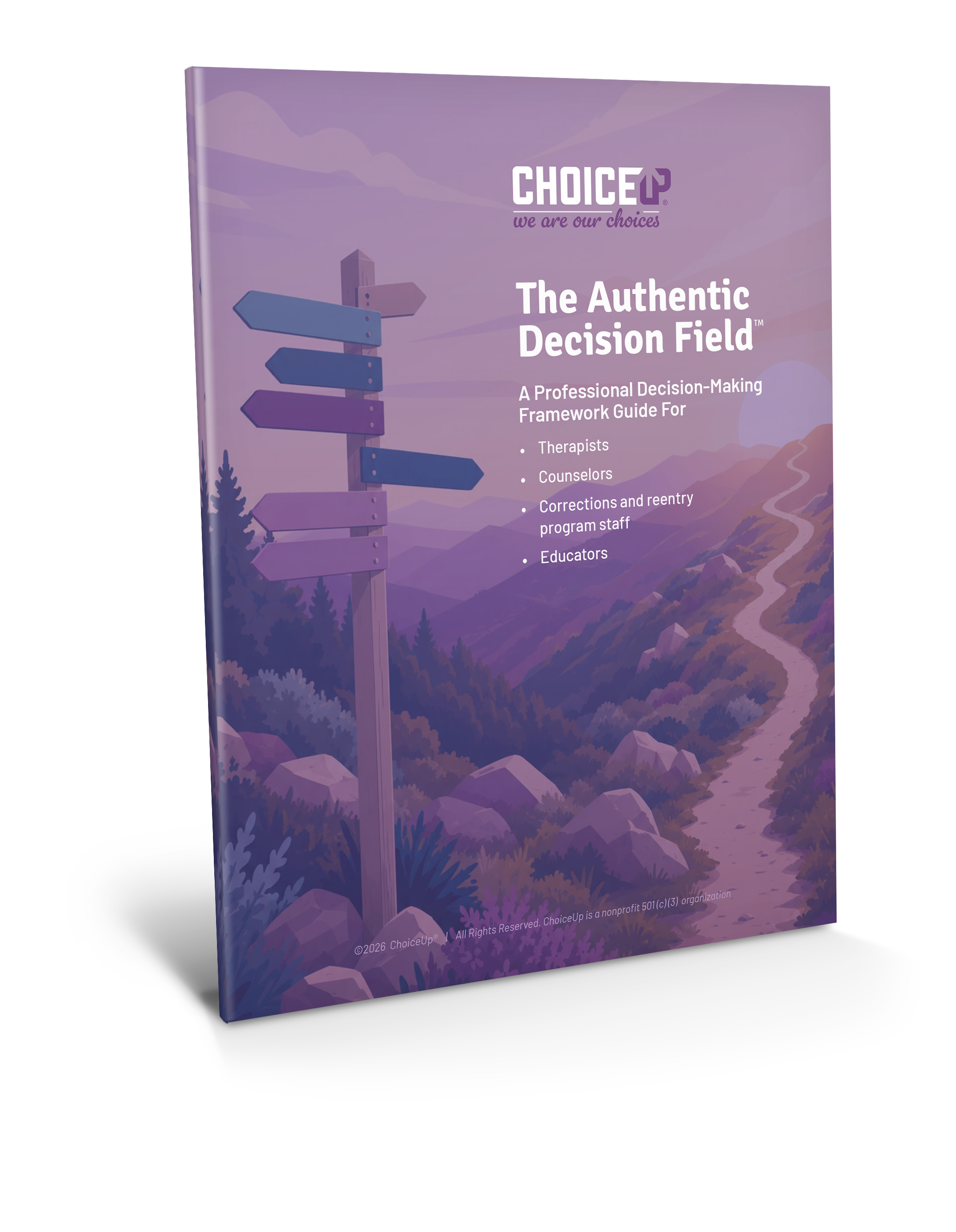
Not a training program yet... The ADF Professional Framework Guide is a free download that walks through the Authentic Decision Field at working depth: how it's structured, where it maps to what you're already seeing in session, and how to put it in front of a client so they can see, practice, and carry it. It's science-informed and designed to sit alongside your clinical practice, not compete with it.
As the framework moves toward academic and clinical validation, formal training pathways may follow. For now, it's yours to use as you see fit.
What It Looks Like
Not sure where you fit?
If your work doesn't fit neatly into one of these three, reach out anyway. The framework was built to adapt — tell us about your population and we'll tell you honestly whether it's a fit.